


Source:cabinhomes.com
Maybe your park model is your full-time home, and you worry about break-ins like any homeowner would. Or maybe it’s your vacation getaway that sits empty most of the year, and you’re wondering what’s happening there when you’re not around. Either way, that nagging worry in the back of your mind isn’t fun.
The good news? Home security technology has gotten really good lately, and a lot of it works perfectly for park models. You don’t need some crazy expensive system that requires professional installation and a monthly bill that rivals your streaming subscriptions.
Let me walk you through the best security tech that actually makes sense for park model living.
Why Park Models Need Different Security Thinking
Before we dive into specific gadgets, let’s talk about why securing a park model is a little different from securing a regular house.
For starters, park models are smaller. That’s actually kind of great for security because you need fewer devices to cover the whole space. A couple of cameras can see everything, and a few sensors can monitor all your entry points without breaking the bank.
But park models also have some unique challenges. Many are in rural or seasonal areas where help might not arrive super fast if something happens. Some sit vacant for months at a time. And let’s be honest, the locks that come standard on many park models aren’t exactly Fort Knox quality.
Also, if you’re in an RV park or community, you’ve got neighbors close by, which can be good for security. But it also means you probably don’t want a loud alarm blaring at 3 AM because a raccoon triggered your motion sensor.
The key is finding security that fits your specific situation without going overboard.
Smart Doorbell Cameras Are Your First Line of Defense
If you’re only going to get one security device, make it a video doorbell.
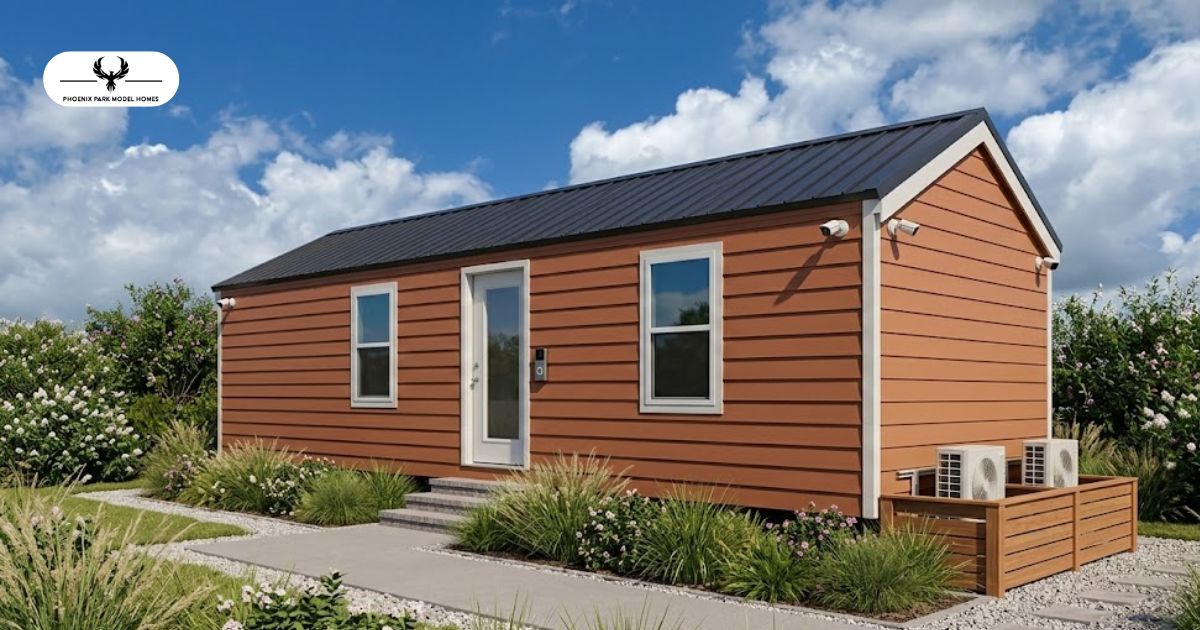
These things have become super popular for good reason. They let you see who’s at your door from anywhere in the world, talk to visitors through your phone, and record everything that happens on your porch.
Ring and Nest are the big names everyone knows, but honestly, brands like Eufy and Arlo make excellent doorbell cameras that work just as well and sometimes cost less. The important features to look for are good video quality (at least 1080p), night vision, and reliable motion detection.
Most video doorbells run on either battery power or connect to your existing doorbell wiring. For park models, battery-powered is usually easier since you might not have doorbell wiring already in place. Just remember you’ll need to recharge or swap batteries every few months.
The doorbell should connect to your WiFi and send alerts to your phone whenever someone approaches. You can check the live feed anytime, and most services store recordings in the cloud for a few days or weeks.
One warning though, if your park model is somewhere with spotty internet, these cameras need decent WiFi to work properly. More on internet solutions in a bit.
Window and Door Sensors Keep Track of Entry Points
Here’s where things get really practical. Window and door sensors are these tiny little gadgets that stick to your doors and windows and tell you when they’re opened.
Companies like SimpliSafe, Ring, and Wyze sell these sensors in packs, and they’re dead simple to install. You stick one part on the door frame and the other part on the door itself. When the door opens and the two pieces separate, you get an alert on your phone.
For a typical park model, you’re probably looking at one door sensor for your main entrance, maybe one for a back door if you have one, and a handful of window sensors. Most park models have four to eight windows, so we’re not talking about a huge investment here.
The beauty of these sensors is they work even if you don’t have a full security system. Get a notification every time a door or window opens, whether you’re home or 500 miles away. If you’re not expecting anyone to be there and suddenly your front door opens, you know something’s up.
Many of these sensors also have modes. You can set them to only alert you when you’re away, or have them chime when you’re home so you know if someone comes in. Really handy if you’ve got kids or want to know when the dog door is being used.
Motion-Activated Cameras for Outdoor Coverage
While your doorbell camera watches the front, you might want additional cameras covering other angles, the back of your park model, the side where you keep your propane tank, or wherever you park your golf cart or ATV.
Outdoor security cameras have gotten ridiculously good. Brands like Blink, Wyze, and Reolink make weatherproof cameras, have great night vision, and run on batteries for months.
The key feature to look for is motion-activated recording. The camera sits there doing nothing until it detects movement, then it starts recording and sends you an alert. This saves battery life and means you’re not scrolling through hours of footage of nothing happening.
Some cameras have built-in spotlights that turn on when motion is detected. This is actually pretty brilliant for security because most burglars really don’t like being lit up like a Christmas tree. Even if nobody’s home, that sudden bright light often sends them running.
A few things to consider: Where will you mount the cameras? Most attach to walls or soffits with screws or adhesive mounts. Make sure you get a good angle that covers the area you care about. And think about whether the camera is low enough that someone could easily steal it; mounting them up high is usually smarter.
Smart Locks Let You Control Access Remotely

Standard door locks are fine, but smart locks take things to another level.
With a smart lock, you can lock or unlock your door from your phone. Forgot to lock up when you left? Do it from the road. Need to let in a repair person while you’re at work? Unlock the door remotely, then lock it again when they leave.
August, Schlage, and Yale all make reliable smart locks. Most replace your existing deadbolt, so installation is pretty straightforward if you’re even slightly handy. You remove the old lock, install the new one, connect it to your WiFi or Bluetooth, and you’re set.
Many smart locks also let you create temporary access codes. Say you’re renting out your park model as a vacation property, you can give guests a code that only works during their stay, and then it automatically stops working. No need to hand out physical keys or worry about getting them back.
The main downside is battery life. Smart locks run on regular AA batteries that you’ll need to replace once or twice a year. Most locks warn you when batteries are getting low, so you won’t get locked out unexpectedly.
Indoor Cameras for When You’re Away
If your park model sits vacant for long stretches, an indoor camera gives you serious peace of mind.
These cameras let you check in on your place anytime. You can see if everything looks normal, if the heater is still running in winter, or if water is leaking somewhere. Some people even use them to keep an eye on pets when they’re away.
Wyze Cam and Blink Mini are both super affordable indoor cameras that work great. They’re small, easy to hide on a shelf or mount on a wall, and they record in decent quality. Most have two-way audio, so you can actually talk through the camera if needed.
Position your indoor camera somewhere that covers the main living area and entrance. You don’t need cameras in every room; that’s overkill for a park model. One or two strategically placed cameras can see most of what matters.
Privacy tip: If you ever have guests or renters, tell them about indoor cameras and where they’re located. Recording people without their knowledge is creepy and potentially illegal in some places.
Don’t Forget About the Basics
All this fancy tech is great, but don’t overlook simple security measures that actually work.
Upgrade your door locks if they’re flimsy. Many park models come with builder-grade locks that a determined person could kick through. Spend fifty bucks on a solid deadbolt. It’s boring, but it works.
Get good window locks too. Those little sliding window latches that come standard aren’t very secure. You can buy wedge locks or dowel rods that make sliding windows much harder to force open.
Motion-sensor lights are cheap and effective. Solar-powered ones are perfect for park models because you don’t need to run wiring. Stick them near entrances and dark corners. Burglars hate working in bright light.
If you have lattice skirting around your park model, reinforce it or replace it with something sturdier. Flimsy lattice is easy to kick through, and suddenly someone’s crawling under your home to access plumbing or utilities.
The Internet Problem (And How to Solve It)
Here’s the thing about all this smart security tech: it needs the internet to work properly.
If your park model is in an area with solid WiFi or cellular service, you’re golden. Just get a basic internet plan, and everything connects beautifully.
But if you’re somewhere rural or remote, you might have spotty or no internet. This doesn’t mean you can’t have security, but it changes what will work.
For places with weak cellular coverage, consider a cellular security system. SimpliSafe and Ring offer systems with built-in cellular backup that don’t rely on WiFi. There’s usually a monthly fee, but it’s worth it for reliability.
Starlink satellite internet has been a game-changer for remote locations. Yeah, the upfront cost for the equipment is a few hundred bucks, but if you’re in the middle of nowhere, it might be your best option for reliable internet that can handle security cameras.
Some cameras can record to local SD cards instead of relying on cloud storage. If your internet goes down, they keep recording locally. You won’t get real-time alerts, but you’ll have footage if something happens.
Building a System That Makes Sense for You
You don’t need to buy everything I’ve mentioned. That would be overkill and expensive.
Think about your specific situation. Are you there full-time, or is your park model empty a lot? Is it in a busy community or isolated in the woods? What’s your budget?
A basic setup might be: a video doorbell, door and window sensors, and one outdoor camera. That covers most of your security needs for a few hundred dollars total.
A more comprehensive system adds smart locks, additional cameras, motion lights, and maybe a full security hub that ties everything together.
Start with the essentials and add more later if you want. Most security tech these days is modular; you can build your system piece by piece.
Monitoring: DIY or Professional?
One last decision: Do you want professional monitoring, or are you comfortable monitoring things yourself?
Professional monitoring means a company watches your system 24/7. If an alarm goes off and you don’t respond, they call the police. Companies like SimpliSafe, Ring, and ADT offer this for $10-$30 per month.
DIY monitoring means you get alerts on your phone and you decide what to do. It’s free, but you have to be paying attention. If you’re in a meeting when your door sensor goes off, you might not see the notification.
For full-time residents, DIY monitoring often works fine. You’re usually around and paying attention to your phone anyway. For vacation properties that sit empty, professional monitoring might be worth the monthly fee for extra peace of mind.
The Real Point of All This
Look, no security system is perfect. A truly determined person can get past almost anything. But that’s not really the point.
The point is making your park model a less appealing target than the one next door. Criminals are opportunistic; they go for easy targets. When they see cameras, smart locks, and lights that turn on automatically, they usually move on to somewhere easier.
Plus, having this stuff just feels better. You sleep better knowing you’ve got sensors on your doors. You enjoy vacation more knowing you can check on your place from the beach. You worry less during winter when you can verify your pipes haven’t frozen.
Security tech has gotten good enough and cheap enough that there’s really no reason not to use it. Pick what makes sense for your situation, install it properly, and then actually relax a little.
Your park model is your space. Protect it in a way that lets you enjoy it without constantly worrying. That’s the whole point of having it in the first place.