

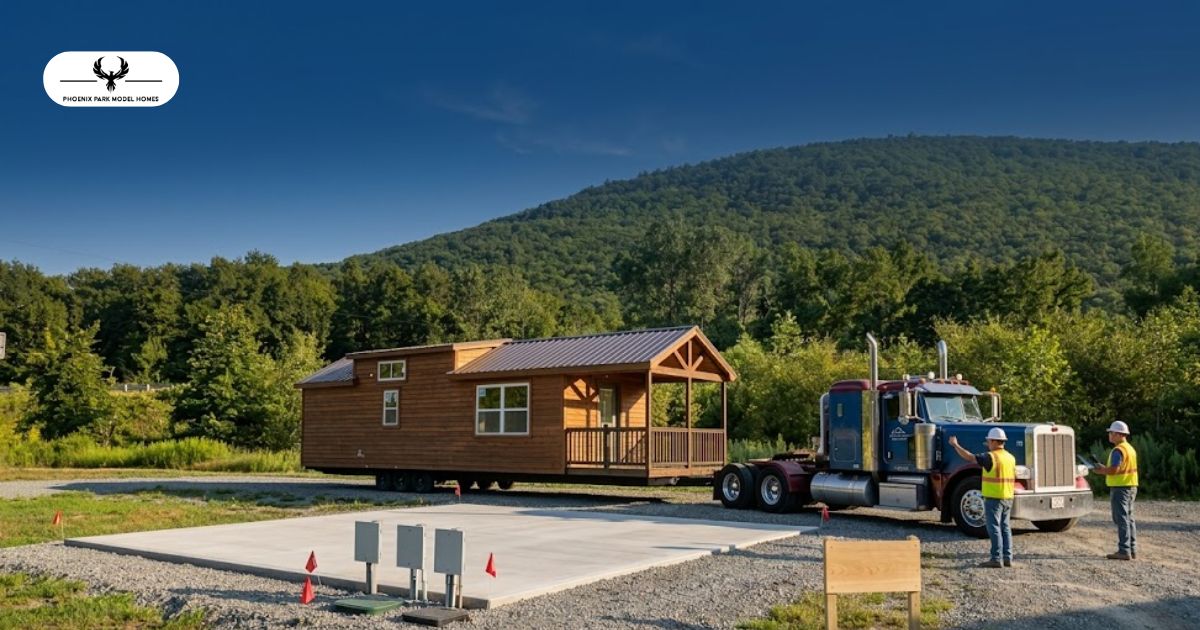
So you’ve picked out your dream park model home. Maybe you’ve been scrolling through floor plans for weeks, imagining where the couch will go and which window will have the best morning light. That’s the fun part, right?
But here’s the thing nobody warns you about, before that beautiful home shows up on a trailer, you’ve got some serious prep work to do. And I’m not talking about picking out curtains.
Getting your site ready for delivery is basically like rolling out the red carpet, except instead of celebrities, you’re welcoming a 400-square-foot house. Miss a step here, and delivery day can turn into an expensive headache real fast.
Don’t worry, though. We’re going to walk through everything you need to know, and I promise it’s not as scary as it sounds.
Why Site Prep Actually Matters
Look, I get it. You just want your park model to show up and be ready to go. But these homes are precision-built in factories, and they need a solid foundation to sit on. Literally.
If your site isn’t level or the ground isn’t stable, you’re looking at problems down the road. Doors that won’t close right. Windows that stick. In worst cases, actual structural damage. Nobody wants that.
Plus, most delivery companies won’t even attempt to place your home if the site isn’t ready. They’ll turn that truck around, and you’ll be stuck paying for a second delivery attempt. Trust me, doing it right the first time saves you money and stress.
Step One: Check Your Local Rules
Before you do anything else, call your local building department. Seriously. Do this first.
Every county and township has different rules about what you need before putting a park model on your property. Some places require permits. Others need septic inspections. Some have setback requirements, which is just a fancy way of saying how far your home needs to be from property lines.
You might need to have the site inspected before delivery, during setup, and after everything’s connected. Getting caught without the right permits is expensive, and it can actually delay your whole project by weeks or even months.
While you’re at it, check if there are any HOA rules if you’re in a community. Some neighborhoods have specific requirements about how homes can be delivered or what they need to look like.
Getting the Ground Ready
This is where the real work happens. Your park model needs to sit on something solid and level, and I mean really level. We’re talking within an inch or two across the entire footprint.
Most people go with one of three options: a gravel pad, concrete piers, or a full concrete slab. Each has its pros and cons.
A gravel pad is usually the cheapest option. You’re basically creating a flat, compacted area of gravel that the home sits on with support blocks underneath. It works great for temporary setups or if you might move the home someday. Just make sure the gravel is compacted really well, or things will settle unevenly over time.
Concrete piers are like the middle ground. These are individual concrete footings that support the frame of your park model at specific points. They’re more permanent than gravel but less expensive than a full slab. Many people like this option because it allows airflow underneath the home and makes utility hookups easier.
A full concrete slab is the gold standard if you’re planning to stay put. It’s more expensive upfront, but it gives you the most stability and basically turns your park model into a permanent structure. Some lenders actually require a permanent foundation if you’re financing.
Whatever you choose, hire someone who knows what they’re doing. This isn’t a DIY project unless you really know your stuff. A foundation that’s even slightly off can cause major problems.
Creating Access for the Delivery Truck
Here’s something people forget all the time: that delivery truck needs to actually reach your site.
Park models come on big trailers, usually pulled by semi trucks. These things need wide, clear paths with solid ground underneath. We’re talking at least 14 feet wide, sometimes more.
Walk your property and think about the route the truck will take. Are there low-hanging branches that need trimming? Tight corners that might be tricky? Soft spots in the ground where a heavy truck might get stuck?
The delivery company will usually do a site visit beforehand, but you can save everyone time by addressing obvious problems early. Clear brush, fill in holes, and if you’ve got a narrow driveway, you might need to widen it temporarily.
Also, think about where the truck will need to turn around. Most can’t just back out the way they came in, especially if you’re dealing with a long, winding driveway.
Getting Utilities Stubbed In
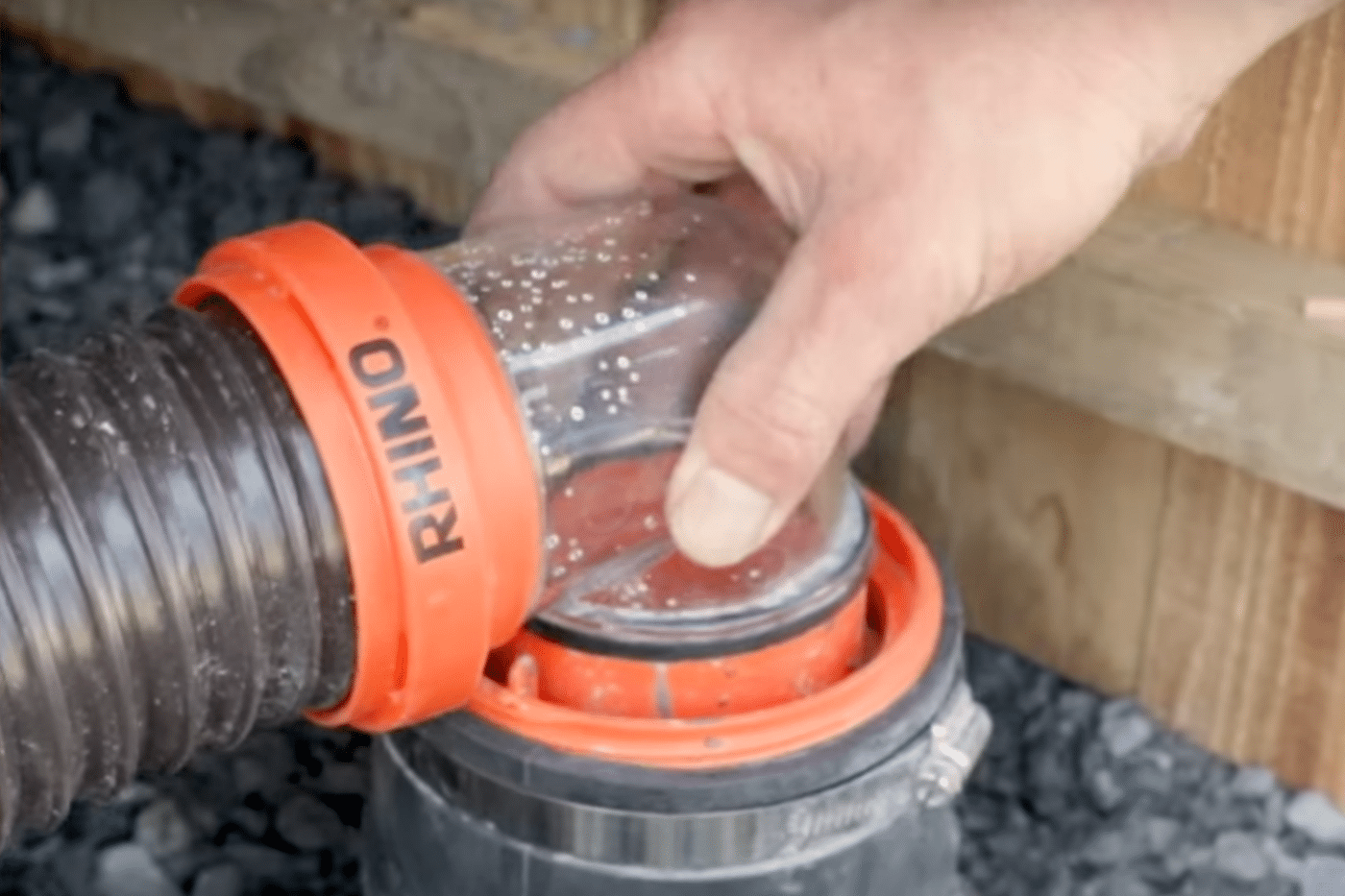
Your park model needs power, water, and probably sewer or septic connections. The key word here is “stubbed in” – that means the connections are brought to where your home will sit, ready to hook up.
For electricity, you’ll need a licensed electrician to run power from your main panel (or the street) to where your park model’s electrical connection point will be. Most park models need at least a 100-amp service, but check your specific model’s requirements.
Water lines should be buried below the frost line for your area; you don’t want frozen pipes in winter. Bring the line to approximately where the home’s connection will be, but leave a little flexibility. Same goes for sewer or septic lines.
If you’re using propane, you’ll need a tank installed before delivery. Most people put it somewhere nearby, but not right against the home.
Don’t forget the internet and cable if you want them. Now’s the time to run those lines, not after your home is sitting on top of where they need to go.
source: zookcabins
The Week Before Delivery
You’re in the home stretch now. Double-check everything about a week before delivery day.
Make sure your site is completely clear. No materials, no equipment, nothing that could get in the way. The delivery crew needs room to work, and obstacles slow everything down.
Confirm the delivery appointment a few days ahead. Weather can delay deliveries, so stay in touch with the company. If it’s been raining a lot, they might postpone if the ground is too soft.
Have your permits visible and ready if inspectors need to check things before the home is set. Keep all your documentation handy.
On Delivery Day
On the big day, be ready early. Delivery crews usually show up first thing in the morning and want to get moving.
Clear any vehicles from the area. You want maximum space for the truck to manoeuvre. If you’ve got nosy neighbours who might park nearby to watch (and you will), politely ask them to keep their distance.
Be available to answer questions. The crew might need to know exactly where you want the home positioned, or they might hit an unexpected issue that needs a quick decision.
Take photos and videos of the delivery process. It’s cool to have for memories, but it’s also good documentation if any damage occurs during transport or setup.
source: tinylife.com
After It’s Set
Once your park model is in position, the real work begins for the setup crew. They’ll level it precisely, secure it to the foundation, and start making utility connections.
Don’t rush this part. Proper leveling and securing can take a full day or more. If the crew seems like they’re taking their time, that’s actually a good thing. Rushing leads to mistakes.
After everything’s connected and secured, you’ll typically need a final inspection before you can move in. The inspector will check that everything meets code and that the home is properly anchored.
The Bottom Line
Preparing your site for a park model delivery isn’t quick or cheap, but it’s absolutely necessary. Budget both time and money for this phase; most people spend anywhere from a few thousand to ten thousand dollars on site prep, depending on what’s needed.
The good news? Once it’s done right, you’ve got a solid foundation for years of enjoyment in your new park model home. And when you’re sitting on your porch watching the sunset, all this prep work will feel totally worth it.
Just remember: measure twice, pour concrete once. Or something like that.


