

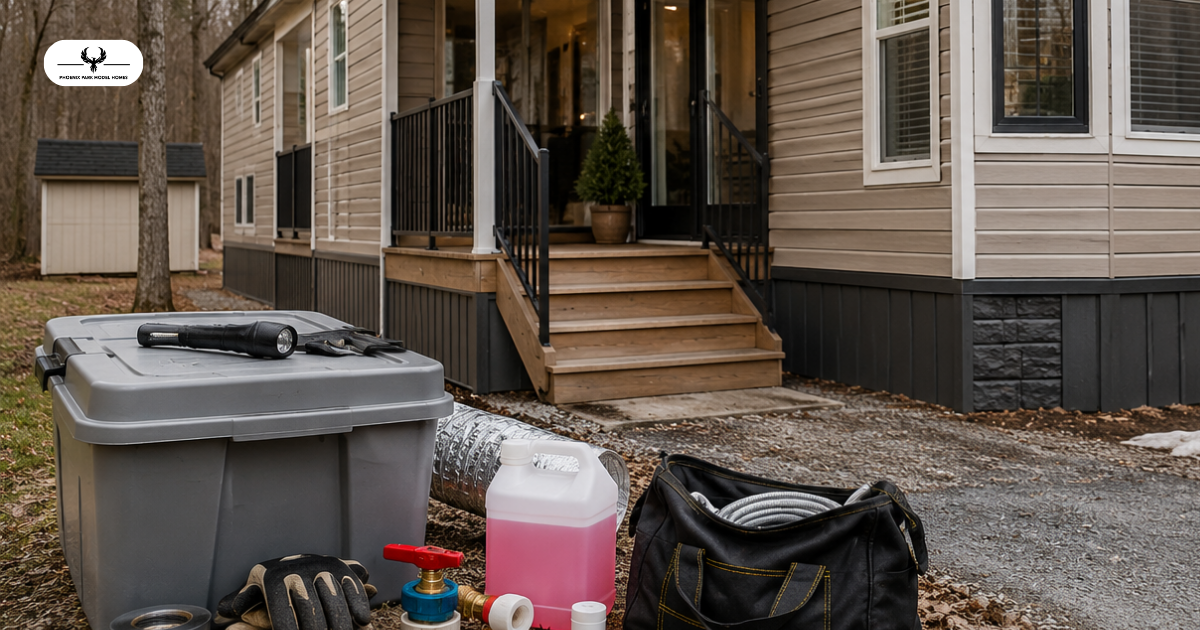
Extended vacancy creates specific vulnerabilities in park models. Water damage, pest intrusion, mold growth, and theft become real risks when a home sits unoccupied for months. Following a systematic preparation process eliminates most of these threats before you leave.
Pre-Departure Walkthrough
Complete a full exterior and interior inspection before closing up. Check every window and door for secure locks and intact seals. Look for loose caulk, cracks, or gaps where water could penetrate. Inspect the roof for damaged seams or missing sealant. Check the skirting around the base; gaps here allow rodents and moisture underneath the structure.
Turn off and completely empty the refrigerator. Verify all appliances are functioning if you plan to keep power on. Fix any existing damage immediately rather than leaving problems to worsen during your absence.
Water System Protection
Frozen pipes cause the most expensive damage during winter vacancy. Proper winterization prevents water damage that often goes undetected until significant deterioration occurs.
Turn off the main water supply valve. Open all faucets, kitchen and bathroom sinks, shower, and outdoor spigots to drain remaining water from lines. Run both hot and cold water to clear the system completely.
Pour RV antifreeze (non-toxic, different from automotive antifreeze) into every drain, including under sinks, showers, and the toilet bowl. Follow your system’s specifications for quantity. The antifreeze protects P-traps, the U-shaped pipes under drains that normally hold water as a seal against sewer gases.
Turn off the water heater. If it’s propane-based, shut off the propane supply to that unit.
Leave all faucets in the off position after draining. This prevents any expansion issues if water somehow remains in the lines.
Plumbing Details
P-traps hold standing water that prevents sewer gases from backing up. When temperatures drop below freezing, this water expands and can crack pipes or cause leaks when it thaws.
After adding antifreeze to main drains, verify it reaches the traps by looking under sinks and in cabinet spaces. For secondary drains without antifreeze access, loosely stuff rags into the drain openings to reduce water splashing back up.
Open cabinet doors under sinks and in bathrooms to allow air circulation and reduce moisture accumulation in enclosed spaces.
Electrical and Power Systems
Unplug all appliances and devices except those needed for security systems or heat. Unplugged systems won’t be damaged by power surges and reduce fire risk from electrical faults during your absence.
Turn off the main electrical breaker to shut down all systems. security cameras or necessary systems can operate on dedicated breakers.
Set the thermostat to 50°F if propane heat remains on. This minimal setting prevents catastrophic freezing without heating an empty home. If you’re shutting everything down, turn off propane at the tank for safety.
Pest Prevention

Rodents and insects exploit gaps and openings in vacant structures. Mesh screens on all vents, dryer exhaust, bathroom fans, and range hoods block entry points. Mice can pass through openings the size of a dime, so seal all gaps and cracks with hardware cloth, caulk, or metal trim.
Remove all food items, including pantry contents, pet food, flour, and sugar. Store these in your primary residence. Even sealed boxes provide insufficient protection against determined rodents.
Empty trash, recycling, and any containers with food residue. No detectable odors should remain that attract animals.
Close all cabinet doors and drawers completely. Open spaces create nesting opportunities.
Security Measures
Install deadbolts on doors if only basic latches exist. Standard factory locks provide minimal security.
Add window locks to windows without them. Consider security cameras with battery backup or cellular capability; visible cameras deter theft even if not actively monitored.
Motion-sensor lights discourage trespassing. Install them near entry points and dark corners of the structure.
Ensure all windows and doors remain locked. Check locks physically rather than relying on memory.
Moisture and Structural Protection
Clean gutters thoroughly so water flows away from the structure rather than pooling near the foundation or skirting. Clogged gutters cause water accumulation and damage.
Verify grading slopes away from the park model. Correct poor drainage before leaving if water tends to pool nearby.
Check all seals around windows, doors, vents, and roof transitions. Small leaks cause significant damage over months of vacancy.
Consider desiccant packets or moisture-absorbing buckets in closets and cabinets to reduce humidity. This prevents mold growth in enclosed spaces.
Monitoring While Away

Periodic checks catch developing problems before they become severe. After heavy rain or snowstorms, drive by if feasible and look for roof damage, water pooling, or other visible issues.
Ask a trusted neighbor or friend to perform a monthly exterior check and send photos. They can report signs of pest activity, weather damage, or break-ins.
If security cameras are installed, access footage occasionally to check for unauthorized activity or obvious problems.
Insurance Notification
Read your homeowner’s policy carefully. Many policies reduce coverage or require notification if a property remains unoccupied for more than 30 or 60 days. Some policies increase premiums during vacant periods.
Contact your insurer before leaving to confirm coverage status and any requirements you must meet.
Pre-Return Preparation
Before occupying the park model again, plan a preliminary walkthrough one day before arrival. This allows time to address any problems discovered before you move back in.
Assess the exterior from a distance first. Look for broken windows, damaged siding, or other obvious damage.
During the walkthrough, check for pest activity signs, water damage, leaks under sinks, or moisture in cabinets. Open windows and doors to air out the interior.
If you winterized the plumbing, reverse the process before using the system. Flush antifreeze from lines with fresh water and verify no leaks occur at connection points.
The Process Works
Extended vacancy doesn’t inevitably damage park models. Systematic preparation before departure and periodic checks during absence prevent most common problems. The time investment before leaving is minimal compared to repair costs after damage occurs.
Winterize water systems, seal entry points, secure against intrusion, and protect against moisture. Return to a functional home rather than one requiring costly restoration. Explore our park model homes and discover features that make seasonal ownership simpler, safer, and more enjoyable.