

You own land. Maybe it’s 5 acres. Maybe 20. It’s just sitting there, costing you property taxes while you mow it occasionally and wonder if there’s something better you could do with it.
What if I told you that land could generate $3,000 to $10,000 monthly, consistently, without building a traditional apartment complex or dealing with massive construction loans?
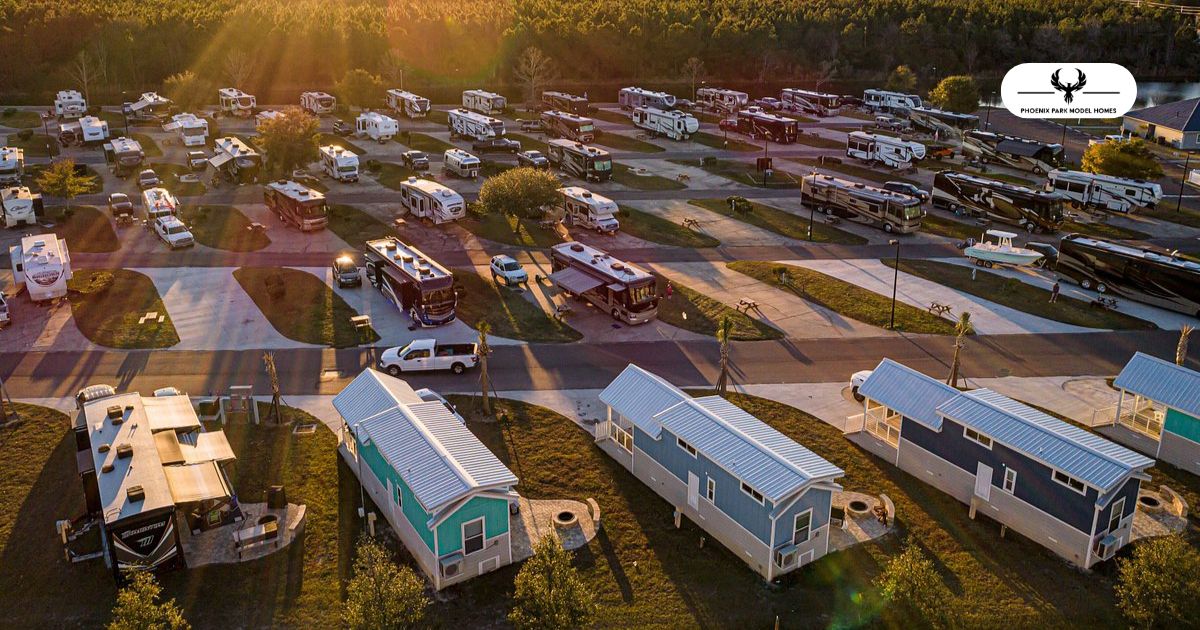
Welcome to the park model compound concept. It’s not quite an RV park, not quite a housing development, but something in between that’s quietly making landowners serious money while solving a real housing problem in their communities.
And the best part? You can start small and scale as you learn.
Why This Works Right Now
The housing market is broken in ways that create opportunity for creative solutions. Starter homes are unaffordable or non-existent in many markets. Apartment rents are astronomical. Young professionals, remote workers, retirees downsizing, and people between life chapters all need quality housing that doesn’t cost $2,000+ monthly.
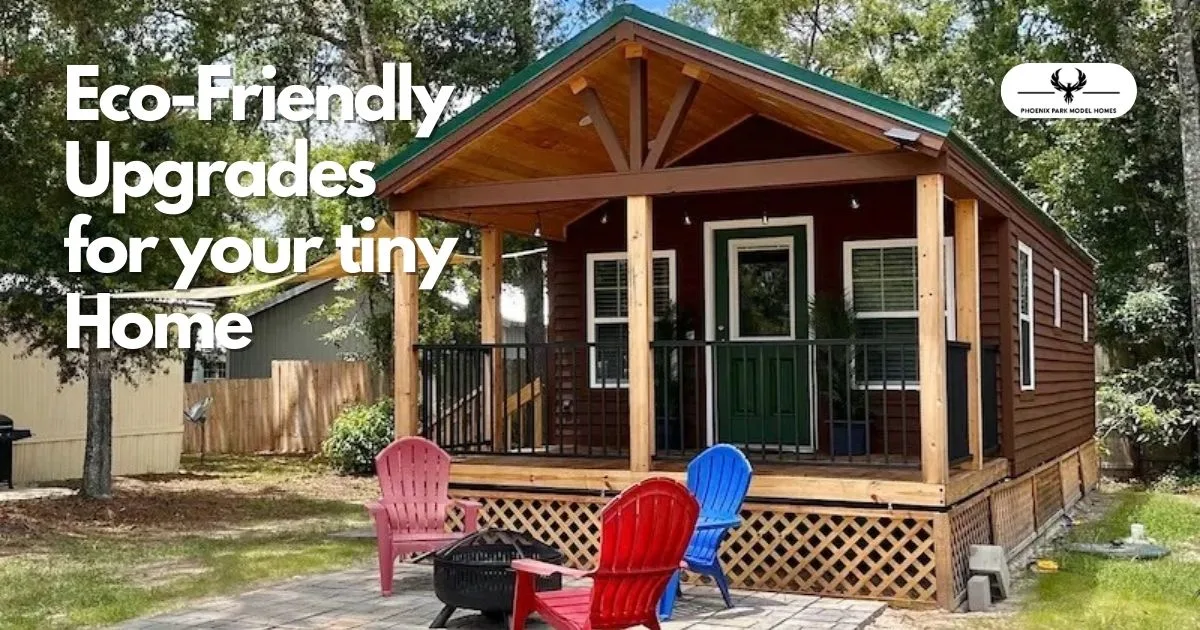
Park models fill this gap perfectly. You can offer comfortable 400-square-foot homes, real homes with full kitchens, bathrooms, living areas, at $800-$1,400 monthly depending on your market. That’s genuinely affordable while still generating strong returns for you.
The demographics are shifting in your favor too. Millennials and Gen Z are less attached to traditional homeownership. They value experiences over possessions, flexibility over permanence. A well-designed park model in a nice setting appeals to them in ways a basic apartment doesn’t.
Remote work changed everything. People can live anywhere now. Your compound on the edge of town or in a rural area isn’t a disadvantage; it’s a selling point. Quiet, nature access, lower density, maybe even mountain or water views. These features compete with urban convenience differently than they did five years ago.
And here’s the thing nobody talks about: there’s a massive middle ground between camping and traditional housing that’s been underserved. People who want simple, affordable living without wheels, without apartment complex living, without massive mortgages. That’s your market.
The Numbers That Make Landowners Pay Attention
Let’s get specific because this only matters if the economics work.
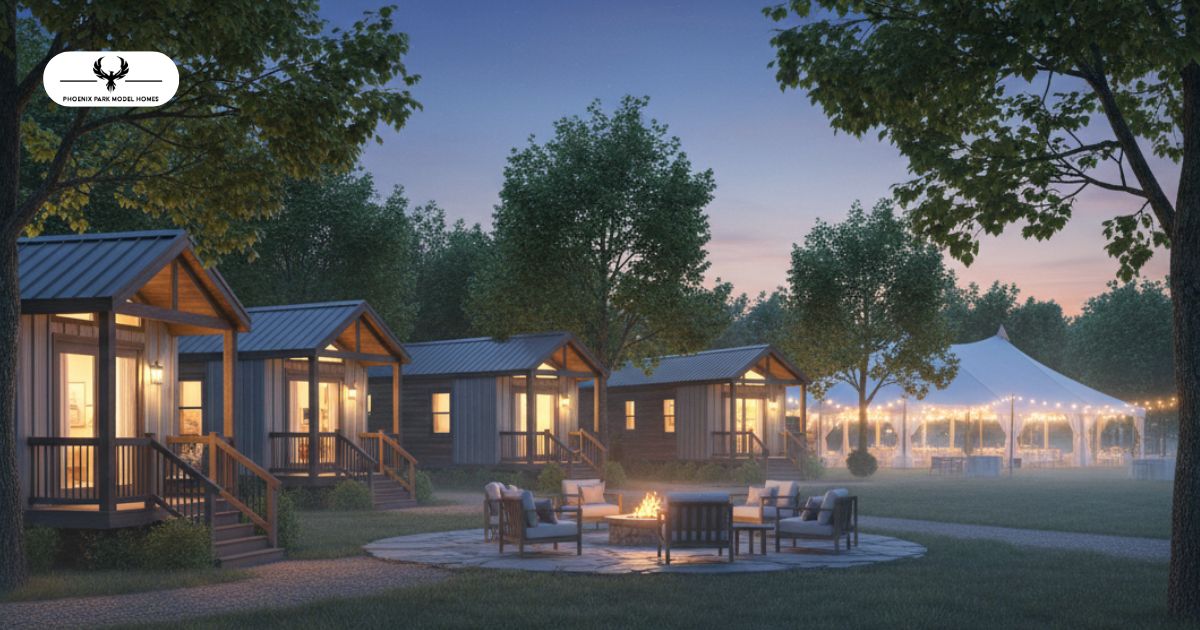
Say you have 10 acres. You decide to develop a 4-unit park model compound on 2 acres, keeping the rest as buffer or future expansion.
Initial investment:
- Four park models at $55,000 each: $220,000
- Site preparation, utilities, roads: $60,000
- Shared amenities (fire pit, small pavilion, landscaping): $15,000
- Permits, fees, miscellaneous: $10,000
- Total: $305,000
Monthly income:
- Four units at $1,000/month each: $4,000
- Annual gross: $48,000
Annual expenses:
- Property taxes: $3,000
- Insurance: $4,000
- Maintenance reserve: $6,000
- Utilities (if you cover any): $2,400
- Advertising/management: $2,000
- Miscellaneous: $2,000
- Total expenses: $19,400
Net annual income: $28,600
That’s a 9.4% cash-on-cash return in year one, assuming you paid cash. If you financed part of it, your leveraged returns get interesting. And we’re using conservative rent estimates; many markets support higher rates.
By year three, assuming you’ve increased rents modestly with inflation and your units stay occupied, you’re netting $35,000+ annually from land that was previously generating zero income.
Scale that to six or eight units, and you’re running a legitimate small business generating six figures gross with excellent profit margins once established.
Starting Small: The Two-Unit Test
Here’s what smart landowners do: they don’t jump in with eight units. They start with two.
Two units is enough to test your market, learn operations, make mistakes when they’re small, and prove the concept before committing serious capital. Two units also stays under various regulatory thresholds in many jurisdictions; you’re not running a “park” yet, just renting a couple of homes on your property.
You invest maybe $130,000 total for two units including site work. If you can generate $1,800-$2,000 monthly from those two units, you’ve proven the model. Then you add two more. Then another two. Growth becomes manageable and self-funding rather than requiring massive upfront capital you might not have.
This phased approach also lets you refine your systems. You’ll learn what tenants want, which floor plans work best, what rental terms make sense, how much maintenance to expect. By the time you’re at six or eight units, you’ve got it dialed in.
Location Matters More Than You Think
Not all land works equally well for this concept. Certain characteristics dramatically improve your odds of success.
Proximity to employment centers or attractions. You don’t need to be downtown, but being within 20-30 minutes of where people work, shop, and play matters. Too remote and your tenant pool shrinks to only hardcore rural lovers.
Access to decent internet. This is non-negotiable for remote workers, which are probably 30-40% of your potential tenant base. If you can’t get reliable internet to your property, factor that into your business plan or reconsider the location.
Some natural amenities. Views, water access, wooded settings, mountain proximity, these features let you charge premium rents and attract quality tenants who specifically want what you’re offering. Flat, featureless land near industrial areas won’t command the same appeal or rates.
Reasonable zoning. Some counties embrace this use easily. Others make it nearly impossible. Research local regulations before buying land specifically for this purpose. Talk to planning departments, not just online research. The conversation reveals nuances that official documents don’t.
Utility access. Getting electricity to your property isn’t usually hard. But water and sewage can get expensive fast if you’re far from municipal systems. Wells and septic work, but they add significant cost per unit. Factor this into your location decision.
The Regulatory Maze You’ll Navigate
I won’t sugarcoat this: zoning and permitting are where dreams sometimes die. But they’re also manageable if you do homework upfront.
Many rural counties allow what you’re proposing under RV park regulations or agricultural exemptions. Some have specific “tiny home” or “park model” ordinances that fit perfectly. Others haven’t caught up, and you’ll be navigating grey areas or seeking variances.
The key is complete transparency with local authorities. Explain exactly what you’re planning. Show them designs and site plans. Ask what the approval process looks like. Don’t assume or try to slip under the radar; that backfires expensively.
In some jurisdictions, staying under a certain number of units keeps you out of more onerous commercial requirements. Five units might trigger full commercial development standards, while four don’t. These thresholds matter enormously to your costs and timeline.
Septic permits deserve special attention. Each unit needs proper waste handling. Whether that’s an individual septic system, a shared system, or a connection to a municipal sewer varies by location and significantly affects cost. This often becomes the limiting factor in how many units your property can support.
The Real Challenges Nobody Mentions
This isn’t passive income, at least not initially. You’ll handle tenant calls, coordinate maintenance, manage bookings, and oversee the property. It’s absolutely more work than owning index funds. But it’s also less work than most small businesses and can become quite passive once established.
Tenant turnover creates costs and vacancies. Even great landlords lose tenants to life changes. Each turnover means cleaning, minor repairs, and finding new tenants. Budget for 10-20% vacancy annually until you know your actual rates.
Weather and environment affect park models differently than traditional buildings. They’re durable but not indestructible. Wind, snow loads, and extreme temperatures require appropriate siting and occasional maintenance you wouldn’t face with concrete structures.
Small communities can develop interpersonal issues between tenants. You’re not just a landlord; you become a community manager when conflicts arise. Clear rules and firm boundaries help, but expect to navigate occasional drama.
Is This Right for Your Land?
This works beautifully for landowners ready to actively manage a small real estate business, who own suitable land or can acquire it affordably, who can invest $100,000-$500,000 depending on scale, and who live near enough to oversee the property regularly, at least initially.
It doesn’t work if you want completely passive income, if local regulations prohibit it, if you can’t stand tenant management, or if your land lacks basic access to utilities and services.
But for the right landowner in the right location with some capital and entrepreneurial spirit? This could transform how you use your property while creating legitimate wealth-building income. Your land stops being an expense and becomes an asset that genuinely works for you.
The compound concept isn’t new, but it’s having a moment because it solves real problems for everyone involved. Tenants get quality, affordable housing. Landowners get strong returns. Communities get workforce housing without massive development. Everyone wins when it’s done thoughtfully.
Phoenix Park Models designs high-quality park model homes built for comfort, durability, and long-term value. Our team can help you choose the right model for personal use, rental communities, or small residential developments.
Visit Phoenix Park Models to learn more and find the right model for your property.